


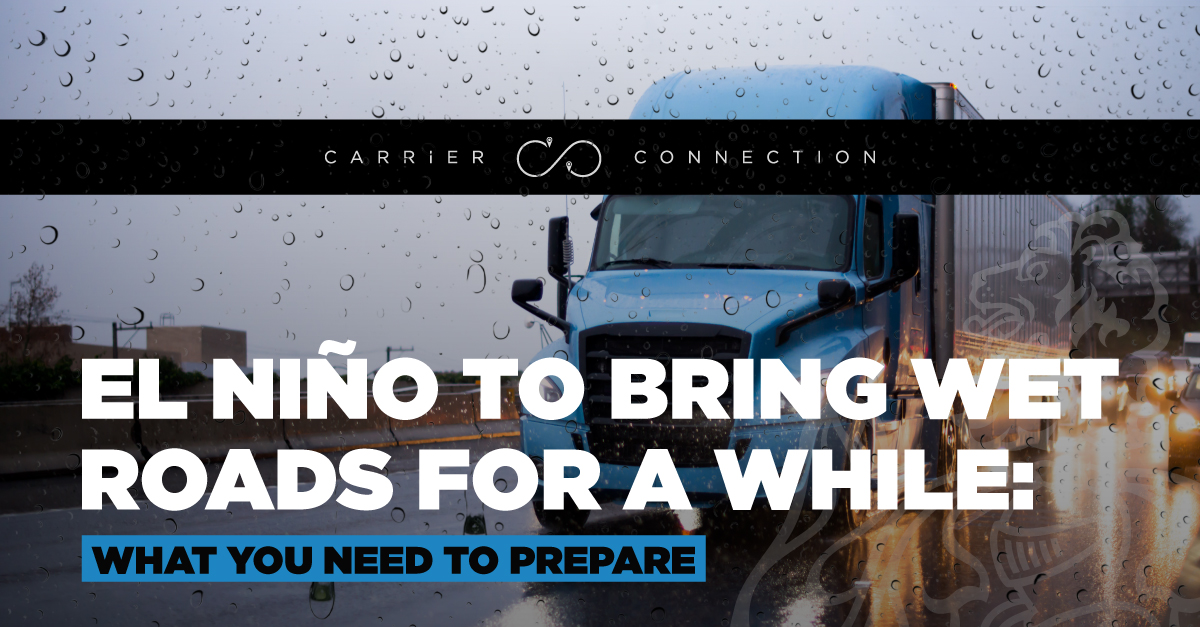
When people describe El Niño, it’s almost in mythical terms: a force bringing severe weather for months at a time.
And… they’re partially right.
El Niño is the cyclical warming of the Pacific Ocean that changes global weather patterns. It recurs every 2–7 years, often intensifying in the wintertime.
Meteorologists are projecting a 90% chance of an El Niño in 2026.
In the highly likely event that El Niño surfaces, truckers should expect several months of heavy rain, making driving conditions hazardous for an extended period.
Here’s what you need to know about El Niño.
|
|
|
|
What We Can Expect from El Niño
When El Niño arrives, it triggers several notable weather conditions.
Across the Southern United States, precipitation increases—both in terms of frequency and intensity. Past El Niños have brought dramatic flooding, heavy rain, and howling winds. Temperatures typically become much colder. These changes usually take place in the fall and winter months, creating sustained, extreme weather throughout the seasons.
Throughout fall and winter of 2026, brace for frequent flooding, freezing temperatures, and nonstop rain in the South.
Safety Ramifications for Trucking
The presence of El Niño has several safety implications for truckers.
Prolonged slick roads.
With water in abundance for several months, roadway traction may be compromised to a massive degree. This can include hydroplaning, longer stopping distances, and the occasional loss of control.
Prepping your vehicle with premium tires has never been more important than this season to maintain traction.
Poor visibility and weather hazards.
Drivers should anticipate regular fog and heavy rain throughout El Niño. More often than not, visibility will be obscured, creating a host of risks for motorists.
Additionally, high winds and thunderstorms will send sheets of water cascading over highways, further clouding visibility.
Higher risk of accidents.
77% of weather-related crashes occur because of wet road conditions. In a time when roads may be slick for most of the season, drivers will need to exercise extreme caution to avoid accidents.
Infrastructure will likely be impacted.
With hurricanes and severe storms within the scope of El Niño, truckers shouldn’t be surprised when road closures are commonplace. Throughout the season, planning a contingency route will help to mitigate the inevitable complications of El Niño.
How to Prepare for El Niño
Above all, equipping your truck with the proper equipment to navigate a season of extreme weather will be critical. Here’s your checklist to ensure you’re prepared.
Buy better tires.
For El Niño 2026, don’t skip out on high-grip tires. Period.
If you’re going to be spending most of your winter on icy highways, it is safer and more cost-effective to pick up premium tires. After all, one slip can mean a six-figure bill.
|
|
|
|
Additionally, ensure that your tires are properly inflated to maximize grip throughout El Niño.
Check your brakes.
Even with great tires, stopping distance can increase by up to 10 times in icy conditions. If your brakes are faulty, you are securing your place on the roadside.
Replace wiper blades.
Wiper blades keep your view of the road clear. If you haven’t replaced your wiper blades in more than a year, make it a priority before the season begins.
The last thing you want is to be driving through a blizzard with blades that churn the snow.
Check all lights.
If a headlight goes out in the middle of a snowstorm, you may end up stranded.
Before embarking on El Niño, replace headlights to prevent a sudden plunge into darkness.
El Niño brings the promise of extraordinary weather conditions. For truckers, El Niño presents a considerable challenge.
By preparing your truck for a long, cold, wet season, particularly with premium tires, you can have peace of mind knowing that whatever the storm brings, you’ll be prepared.