


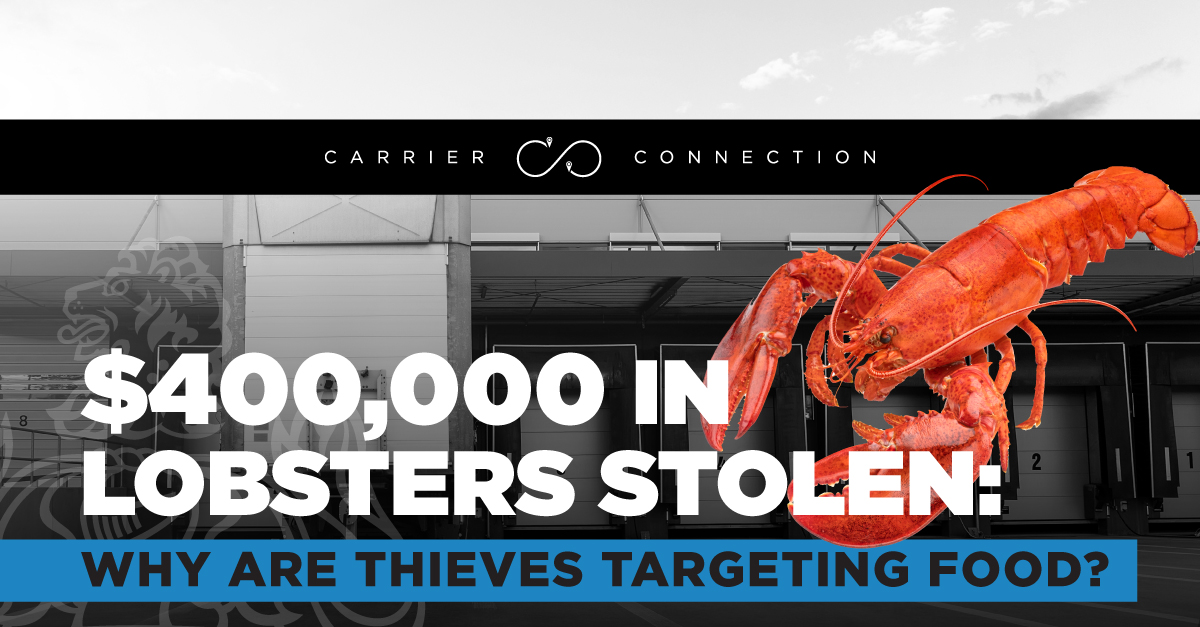
Somewhere, $400,000 worth of live lobster is being served to unassuming customers. As food commodities are being stolen more than ever, it’s essential to understand this bizarre question: Why are thieves targeting food in the first place?
In a bizarre case of grand cargo theft, nearly half a million dollars in seafood was abducted by a crime ring on December 12. Tragically, the affected company, Lineage Logistics, reported that this wasn’t even their first instance of seafood disappearing this month.
Just ten days earlier, crooks made off with a shipment of crab. Thieves are targeting food.
Gone are the days when gold and electronics are the only products at risk of theft. Nowadays, criminals have developed a taste for lobsters, ribeye, and tomatoes.
Here’s why thieves are targeting food and what you can do to prevent your delicacies.
Why are Thieves Targeting Food?
Food and beverage products are now the number one stolen commodity, with thefts increasing 79% year-over-year.
It can seem puzzling at first: Why would thieves not steal something more lucrative? Wouldn’t electronics give thieves more bang for their mischief?
Unfortunately, food is perfect for picking for two major reasons:
-
Food prices have skyrocketed.
Due to inflation, food prices have reached record numbers. For thieves, these massive margins are appetizing, making them ideal for black and gray markets.
-
You can’t trace a lobster.
Unlike electronics, steaks and crab don’t come with serial numbers, making them remarkably difficult to track.
Restaurants and specific markets don’t require the same layers of precaution that are typically found in transportation. These vendors will often purchase well-below-market products without question. California, Texas, and Florida are hotbeds for this type of activity.
This intrackability is compounded by the consumable nature of food products. As you’re likely familiar, once food is used, it’s essentially gone, highlighting a critical advantage for thieves targeting food.
This despicable, though clever, targeting of food is indicative of something more alarming: Crime rings are every ounce as deliberate and organized as typical businesses.
Still, with the scope of the lobster heist, you may be wondering how it happened in the first place.
How Do Large Loads Become Stolen?
In the case of the lobster heist, a $400,000 crime began with one letter.
Investigators discovered that one single character was altered in the email address of the real trucking company. With forged paperwork and stolen MC numbers, the fraudsters were convincing.
Once crime rings have the trust of their victims, they’ll schedule a fictitious pickup and arrive before the legitimate carrier. By the time the actual carrier arrives, the fraudsters are well on their way to a black-market buyer.
These heists are quiet, quick, and subtle, making them more dangerous.
How Can I Protect My Perishable Shipments?
Above all, be vigilant. If you can catch a character difference in an email, you can catch a difference in the character of your shippers.
In addition to old-fashioned caution, there are a few tools that can help you prevent fictitious pickups:
- Utilize high-security seals and tamper-evident packaging. This will hold up would-be thieves, potentially buying precious time or stopping them altogether.
- Plan your routes carefully, particularly when they originate from California, Texas, or Florida. Avoid locations with nefarious reputations.
- Consider investing in geofencing GPS devices. These gadgets will alert you if a route deviates from its intended course. Some devices even allow remote locking.
Ultimately, your intuition and judgement will be your greatest tools in preventing cargo theft.
As thieves increase the scope of their unsavory mission, it’s vital that carriers stay vigilant as theives continue to target food.
By exercising sound judgement and calling on the right tools, you can stay safe. After all, you’ve got bigger fish to fry than lobsters.
###
The England Carrier Services (ECS) division offers various services for carriers ranging from maintenance to support. As ECS members, carriers have access to nationwide discounts on fuel and tires from dedicated team members committed to finding the best price. ECS also provides factoring services with benefits such as same-day funding to a bank account or fuel card. These options allow carriers the freedom to focus on growing their business while saving time and money.